
Web · 5 min read · November 2026
The words on your website are losing you customers
A website can be well designed, fast and mobile-friendly, and still not bring enquiries, because of the words on it. Vague headlines, empty claims, missing details and buried calls to action make visitors work too hard to understand whether you can help them. Most leave instead.
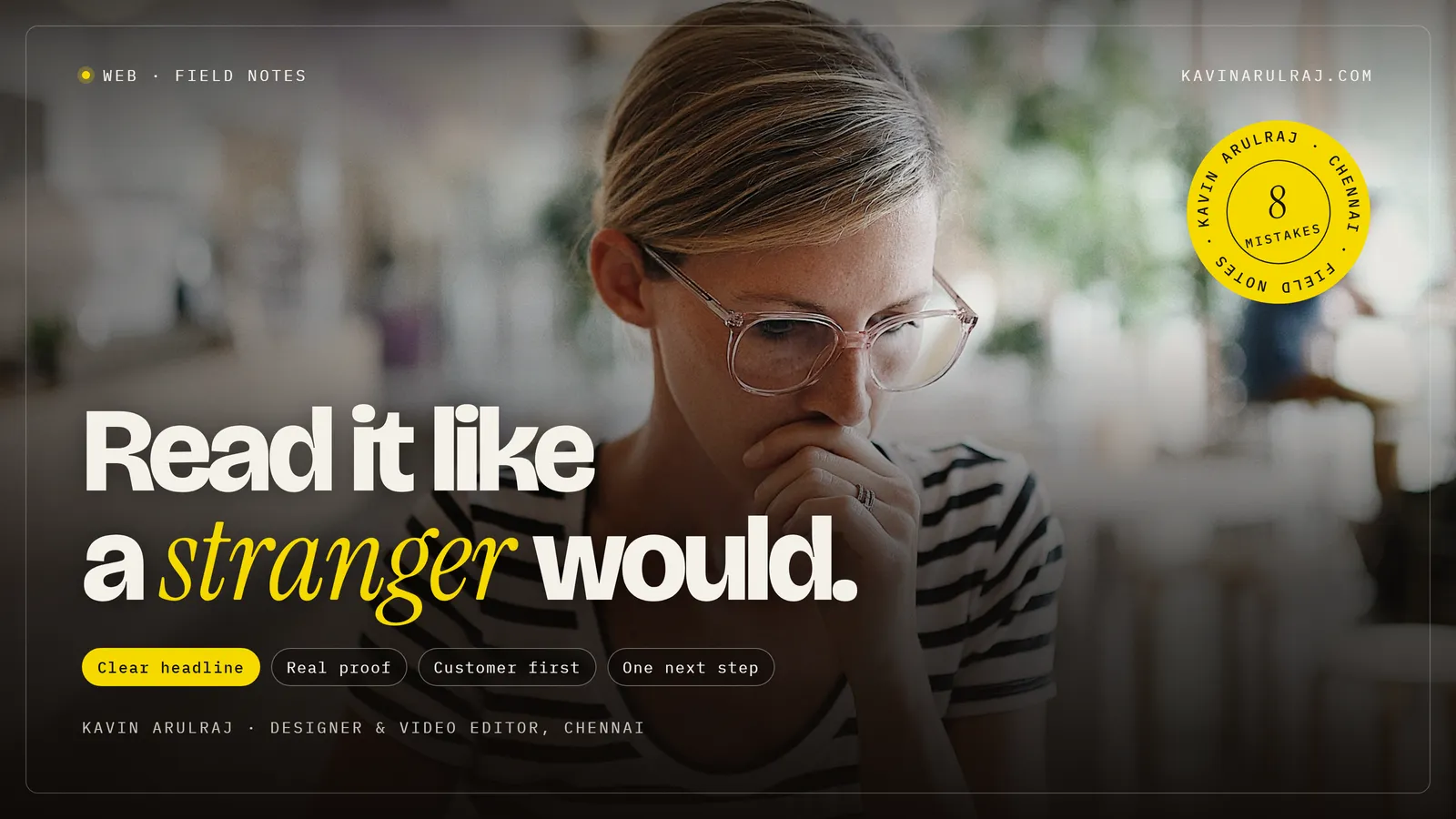
Here are the most common copy mistakes on small business websites, why they cost enquiries, and simple rewrites you can make yourself this week.
01
"Welcome to our website"
The most valuable space on the site, the top of the home page, is often spent on a greeting. Visitors already know they are on your website. Replace it with what you do, for whom and where: "Interior design for apartments in Chennai, from concept to handover."
02
Empty claims
"Best quality", "customer satisfaction is our priority", "we are the leading…", "one-stop solution". Every competitor says the same, so it means nothing. Replace claims with specifics: "Most kitchens installed in 21 days", "Two revision rounds included", "340 Google reviews, 4.8 average". Specifics can be checked, so they are believed.
If you cannot think of a specific fact to replace a claim with, that is useful information too: it may mean the claim was never really true, or that you have not yet measured something worth measuring. Start counting: projects finished, average delivery time, repeat customers. Those numbers become your best copy.
03
Writing about yourself, not the customer
Copy that starts every sentence with "We" describes the business, not the customer's problem. Turn it around: instead of "We provide comprehensive accounting services", try "Get your GST returns filed on time every month, without chasing anyone." Talk about what changes for the customer.
A quick test: count how many sentences on your home page start with "We" or your business name. If it is most of them, rewrite a few from the customer's side.
04
Jargon
Industry terms that feel normal to you can confuse customers: "bespoke solutions", "end-to-end", "synergy", or technical terms specific to your trade. Use the words your customers use when they call you. If they say "website for my shop", do not call it a "digital presence solution".
05
"Contact us for details"
Hiding prices, timelines and processes behind "contact us" makes visitors assume the worst: that it is expensive, slow or complicated. Many leave rather than ask. Give at least starting prices, typical timelines and what happens after they get in touch. You will get fewer but better enquiries.
06
Walls of text
Long paragraphs are skipped, especially on phones. Use short paragraphs, clear headings, bullet points for lists and bold for key details. Visitors scan first and read only what seems relevant. Help them find it.
Headings should say something useful on their own, such as "Prices start at ₹9,000", rather than "Our pricing".
07
No clear next step
Pages that end without telling visitors what to do lose them. Every page should finish with a clear action: "WhatsApp us for a quote", "Book a free consultation", "See prices". Put it on every page, not just the contact page.
08
Out-of-date details
Old prices, a phone number that has changed, a team member who left, last year's offers still showing, "new" services launched three years ago. Outdated copy makes visitors wonder whether the business is still running, and leads to awkward conversations when the price on the site is not the price you quote. Put a reminder in your calendar to read the whole site every six months.
Read it as a stranger would
Ask someone who does not know your business to look at your home page for ten seconds and tell you what you do, who it is for and what they should do next. Their answer shows exactly where the copy is failing.
Specific, customer-focused and clear beats clever every time.
Start with the home page headline and the main service page. Those two rewrites alone often make a noticeable difference to enquiries.
Quick rewrites
- "Welcome to our website". "[What you do] for [who] in [where]."
- "Best quality service". A specific, checkable fact.
- "We provide…". "You get…" or the customer's result.
- "Contact us for pricing". "Prices start at ₹…"
- No ending. "WhatsApp us for a quote today."
Work through your main pages with this list. Most fixes take minutes and need no design changes at all.
Quick answers
What should my homepage headline say?
What you do, for whom and where, in plain words. For example: "Wedding and corporate video editing in Chennai." Avoid greetings and vague claims.
Should I show prices on my website?
At least starting prices or typical ranges. Hiding all pricing makes many visitors assume it is too expensive and leave without asking.
How do I make my website copy more persuasive?
Replace empty claims with specific facts, write about the customer's problem and result, use their words, keep it scannable and end every page with a clear next step.
Related reading
Words that bring enquiries.
When I build your website, I help sharpen the copy: clear headlines, specific claims, visible prices and a next step on every page. Send me your home page and I'll suggest a better headline.