
Video · 5 min read · October 2026
Food reels that bring people to your table
Food is one of the most watched categories on Instagram, and one of the most competitive. People scroll past hundreds of dishes a day. The reels that make someone message a friend "let's go here this weekend" are not the most expensive ones. They are the ones that make the viewer almost taste the food.
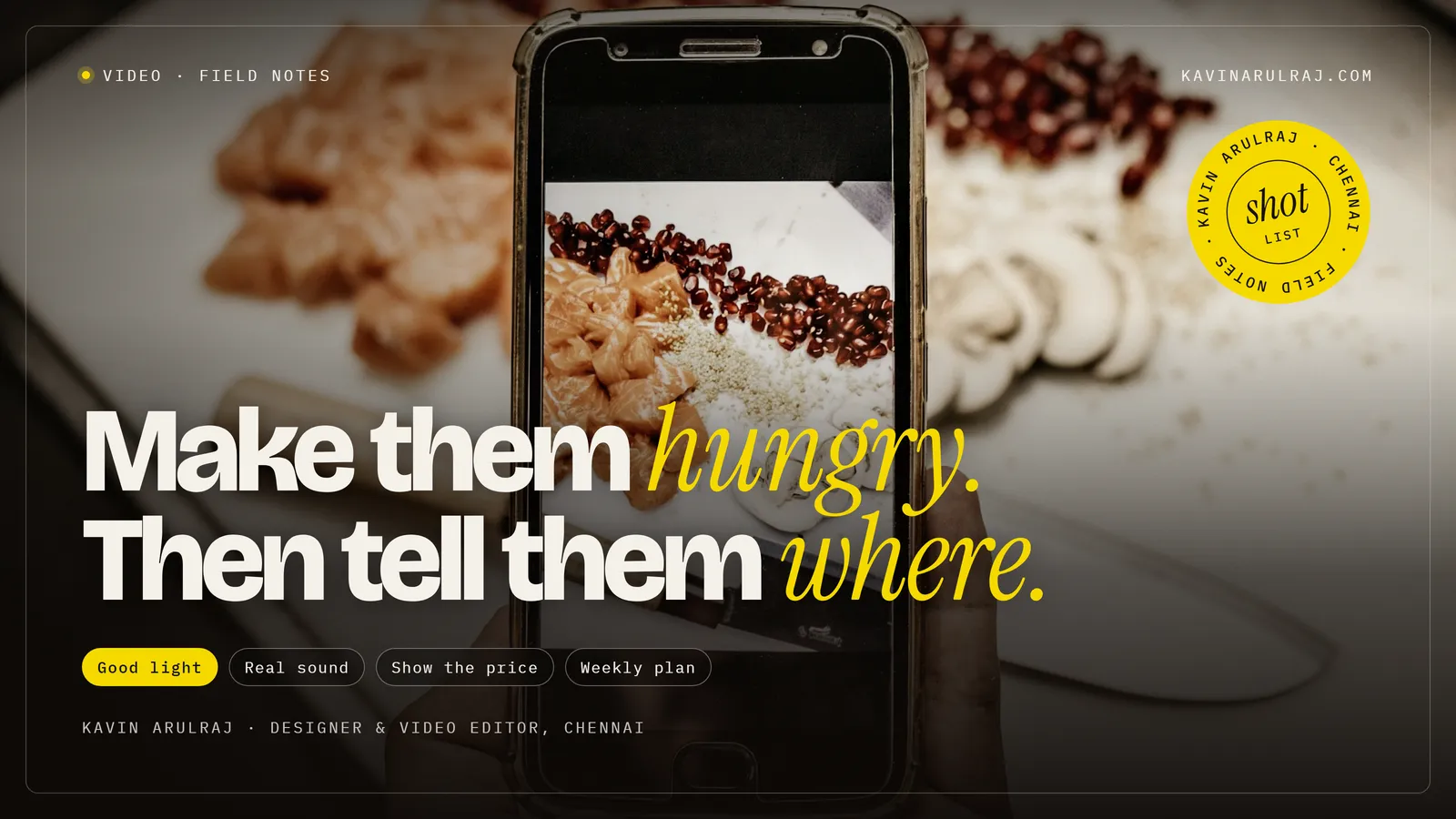
Here is how restaurants, cafés, bakeries and cloud kitchens can film and edit food reels that work: the shots that matter, light and sound, formats that perform and a realistic weekly plan.
01
Shots that make food look good
Close-ups, close enough to see texture. Movement: steam rising, cheese pulling, ghee pouring, dosa batter spreading, a knife cutting through a cake. The first bite or the first tear of a parotta. Hands at work in the kitchen. A slow push towards the finished plate. Each shot only needs two to four seconds in the final reel, so film many.
02
Light is everything
Food looks best in soft side light, from a window or a soft lamp, not harsh overhead tube lights or yellow restaurant lighting. Film near a window during the day, with the light coming from the side or slightly behind the food, which brings out texture and steam. Turn off overhead lights to avoid mixed colours.
Backlight makes steam visible. Place the light behind the dish and shoot towards it, slightly from the side.
03
Sound sells too
Sizzling tawa, crunching dosa, pouring filter coffee, a crackling papad. Real food sounds, recorded close, are powerful in reels, often more than music. Record clean sound from the kitchen and let the editor mix it with light background music, rather than drowning it out.
04
Formats that work
The making of a signature dish, from raw ingredients to plate. "Menu in 15 seconds" showing several dishes quickly with prices on screen. Behind the scenes before opening. A chef or owner explaining one dish. Customer reactions, with consent. Seasonal specials and festival menus. A "what ₹500 gets you here" reel is especially effective for value-conscious diners.
05
Show the place and the price
People choosing where to eat want to know where it is, what it feels like and roughly what it costs. Include a shot of the interior or the entrance, the area name on screen and, where it suits your brand, prices. Pin the location and add it to the caption. Reels that only show food can leave viewers unsure whether they can actually visit.
06
Editing for appetite
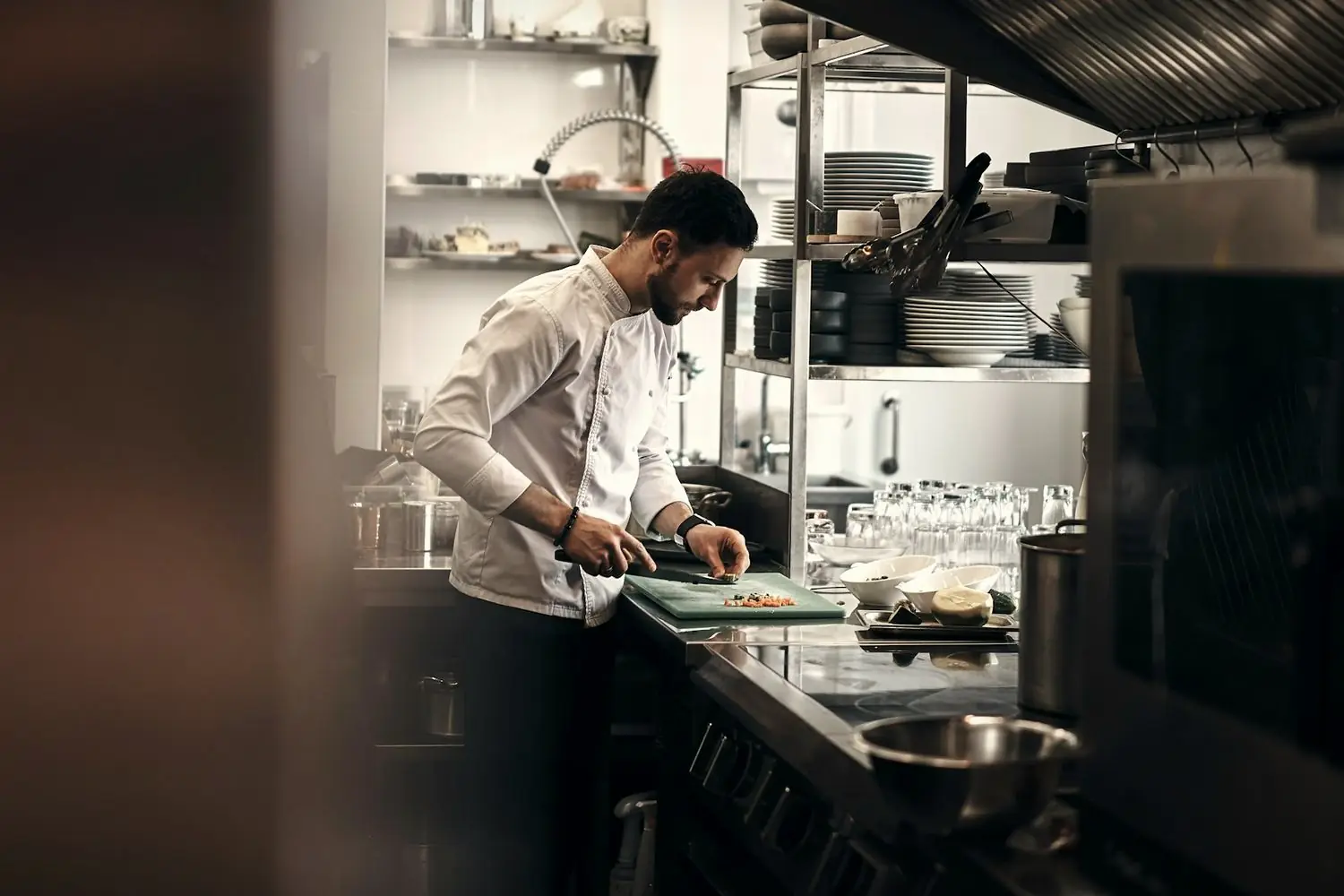
Cut on movement and to the rhythm of the music or sounds. Keep it short, usually 15 to 30 seconds. Warm, natural colour, never so saturated that food looks artificial. Large on-screen text for the dish name and price. End with a clear next step: the location, ordering link or "DM to reserve".
07
A realistic weekly plan
Film on a quieter afternoon each week, for an hour, before service. Shoot three or four dishes or moments. That gives enough footage for two or three reels a week. Send the clips to your editor in one batch, or edit them yourself with a simple template, so posting does not depend on finding time during a busy service.
08
Work with delivery apps, not against them
Many restaurants get orders through Swiggy and Zomato as well as walk-ins. Reels can support both: show the dish, then tell viewers where they can order or visit. If you run special offers for direct orders or dine-in customers, mention them on screen. Reels that send people to your own ordering link or table booking help you keep more of the margin on each order.
Make them hungry, then tell them where
A food reel has two jobs: create appetite in the first few seconds, and make it easy to act in the last few. Most restaurant reels do the first and forget the second.
Steam, sizzle, first bite, then the address.
Track which reels bring visits or orders. Ask new customers how they found you; often the answer is a specific reel, which tells you exactly what to make more of.
Food reel shot list
- Ingredients. Fresh produce, spices, close-up.
- Process. Pouring, flipping, cutting, plating.
- Hero shot. The finished dish in soft side light.
- Action. First bite, cheese pull, steam, crunch.
- Place. Entrance, interior, area name.
Ten to fifteen of these clips, each a few seconds long, make one strong reel. Shoot more than you need; the best moments are often unplanned.
Quick answers
What makes a good restaurant reel?
Close-up shots of food with movement and real sounds, soft side lighting, quick editing, clear text with the dish name and price, and an obvious next step such as the location or ordering link.
How often should a restaurant post reels?
Two or three a week consistently is a realistic target. Batch filming once a week makes it manageable.
Can I film food reels on a phone?
Yes. In soft window light, with steady close-ups and real food sounds, a modern phone produces excellent food reels.
Related reading
Reels that fill tables.
Send me a week's kitchen footage and I'll edit food reels with real sound, warm colour, dish names and prices. Twelve reels a month is ₹12,000. Tell me about your menu.